

Last Updated: November 1, 2026
Quick Summary
To spot fake fashion sites, check the price against known retail levels, verify reviews and company identity, inspect product photos and logos, and run technical checks on the domain. Pay with a method that offers dispute rights, such as a credit card or PayPal.
- A steep discount on a designer item, such as 80 percent off, is a major warning sign.
- Generic five-star reviews without sizes, delivery dates, or problems often come from bots.
- Run a reverse image search on product photos to see if they appear on unrelated stores.
- Domains registered only weeks or months ago are a warning sign for a store claiming years of history.
- Bank transfers, gift cards, and cryptocurrency are effectively irreversible, so avoid stores that only accept them.
Table of Contents
- Why Fake Fashion Sites Are Hard to Spot
- Step 1: Check Prices Against Known Retail Levels
- Step 2: Verify Reviews and Company Identity
- Step 3: Inspect Product Photos, Logos and Product Quality
- Step 4: Run Technical Checks on the Website and Domain
- Step 5: Assess Payment Methods and Checkout Safety
- What to Do After Ordering From a Suspected Fake Site
- Use This Checklist Before Your Next Order at Heartsnatchersclothing
- Frequently Asked Questions
Why Fake Fashion Sites Are Hard to Spot
Fake fashion sites look polished. They use real product photos stolen from brands, clean layouts, and checkout pages that look like any other store. That is what makes them dangerous.
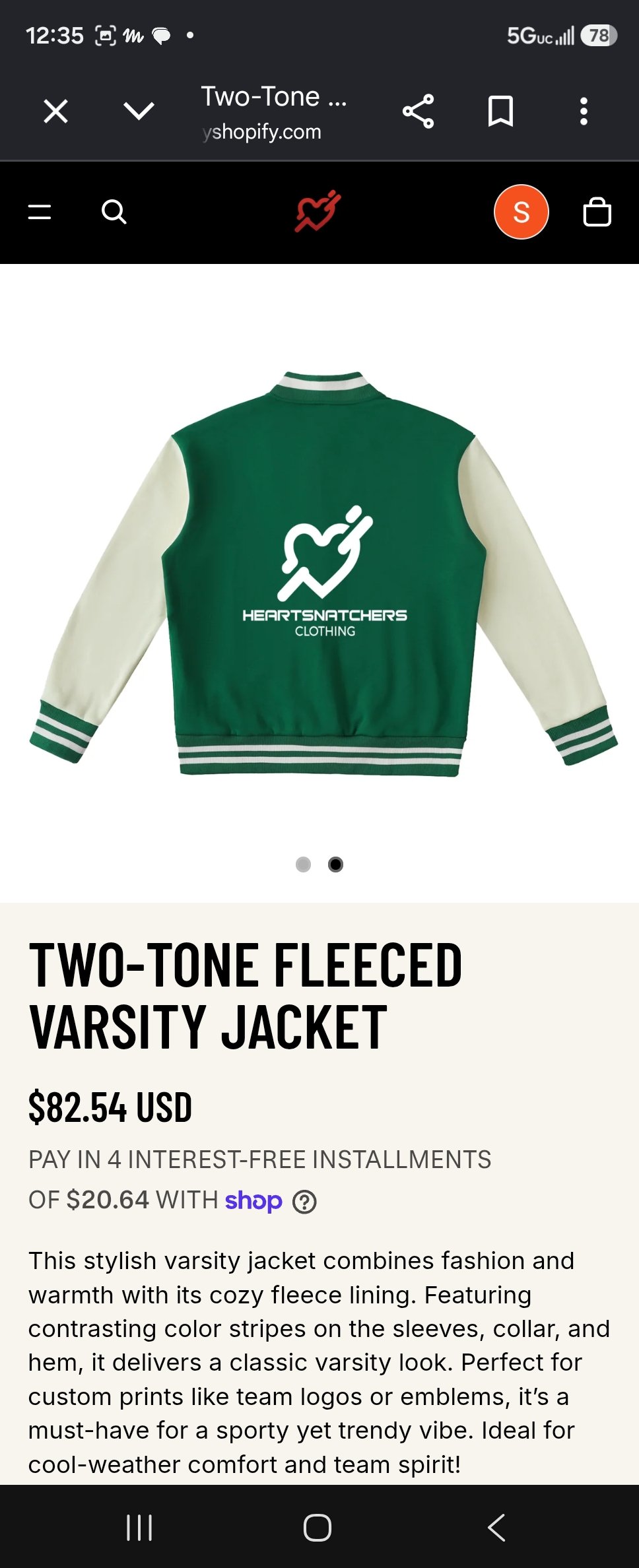
A fake fashion site is a shop that sells clothing it does not have, or sells copies while implying they are the real brand. Some take your money and ship nothing. Others ship cheap goods that fall apart after one wash.
Scammers rely on speed. They want you to buy before you think. The steps below slow that down and give you a clear way to check a store.
- Look at price first, reviews second, company details third
- Check the checkout before you enter any payment data
- Trust what you can verify, not what the homepage claims
Step 1: Check Prices Against Known Retail Levels
Start with price. If a store sells a designer jacket at 80 percent off, something is wrong. Compare the price with the brand's own website and with major retailers that carry the same label.
A useful habit is to search the exact product name in quotes. If the same item sells for a normal price everywhere else, a steep discount on one unknown site is a warning sign.
Watch out: deep discounts on new season stock are a classic lure. Real sales happen, but they rarely look like a store closing down.
Step 2: Verify Reviews and Company Identity
Reviews can be faked, so read them carefully. Look for reviews that mention specific sizes, delivery dates, or problems. Generic five-star comments with no detail often come from bots.
Next, find out who runs the store. A legitimate shop lists a registered company name, a physical address, a contact email, and terms of service. Check that the address exists and that the contact details respond.
- Search the company name with the words "complaints" or "scam"
- Confirm the returns policy and shipping terms are readable
- Be wary of sites with no company details at all
Step 3: Inspect Product Photos, Logos and Product Quality
Fake sites often reuse official product photos. Run a reverse image search on the main product picture. If the same photo appears on many unrelated stores, the site is probably copying.
If you receive an item, check the quality. Look at the stitching, the fabric, and the label. Logos with wrong fonts, uneven spacing, or spelling mistakes in the brand name point to a counterfeit.
A single good photo means little. Ask for more angles or detail shots before you buy.
Step 4: Run Technical Checks on the Website and Domain
Checking the URL and looking for HTTPS is a start, but it is not enough. A few minutes of technical checking will separate a real store from a cloned storefront.

Read the domain carefully. Compare the address bar against the brand's official site. Common tricks include extra words (brand-outlet, brand-official-store), swapped letters, added hyphens, or unfamiliar country-code endings. If you arrived from an ad or a social link, type the brand's known address yourself rather than trusting the link.
Check domain age and registration. A domain registered only weeks or months ago is a warning sign for a store claiming years of history. Free WHOIS lookup tools report when a domain was created and, sometimes, where it is registered. Very new domain plus steep discounts plus thin company details is a pattern, not a single flaw.
Look for copied site content. Scam sites often lift text, product descriptions, and even "about us" pages from real retailers. Paste a distinctive sentence from the store's about page into a search engine in quotes. If the same wording appears on an unrelated site, the content was likely copied. The same reverse-image trick from Step 3 applies to logos and banners.
Check the security and structure signals, but read them correctly. HTTPS and a padlock protect data in transit; they do not prove legitimacy. Look instead at whether the checkout loads from the same domain as the store, whether links in the footer actually resolve, and whether the contact page lists a real address and working email rather than a generic form only.
Free website checkers can report domain age, hosting location, and reputation in one place. Treat the result as one signal among several, a clean report does not clear a store, and a single odd result does not condemn one. The goal is a pattern.
If the domain is new, the content is copied, the URL mimics a brand, and the only payment option is a bank transfer, you have enough signals to walk away without placing an order.
Step 5: Assess Payment Methods and Checkout Safety
Payment is where most losses happen, so this is the step to slow down on. A safe checkout offers at least one payment method with a built-in dispute route. Credit cards and PayPal are the two most common examples: both let you open a dispute if goods never arrive or arrive materially different from what was described. Debit cards often carry weaker protections than credit cards, and bank transfers, gift cards, and cryptocurrency are effectively one-way, once the money leaves, reversing it is difficult or impossible.
Here is how the main options compare on buyer protection:
- Credit card, Strongest route. You can usually raise a chargeback with your card issuer; many issuers accept disputes for months after the transaction, though exact windows vary by bank and network. Keep the order confirmation and any seller messages.
- PayPal, Offers its own buyer protection for eligible purchases. File a dispute through PayPal's resolution center rather than only with your card, and note the deadline PayPal shows in your account.
- Debit card, Protections exist but are typically narrower and depend on your bank. Treat it as weaker than credit.
- Bank transfer / wire, Very hard to reverse. A store that only accepts this is a serious warning sign.
- Gift cards and cryptocurrency, Designed to be irreversible. No legitimate fashion retailer needs these as a primary payment method.
A padlock and HTTPS on the checkout page only mean the connection is encrypted. They do not mean the seller is honest, anyone can obtain a certificate. Judge the payment method and the seller, not the padlock alone.
Watch for checkout-page red flags too: a payment form that loads from a different domain than the store, a page that asks for more information than a normal order needs (for example, your card PIN or online banking password), or a sudden redirect to an unfamiliar payment processor mid-checkout. These are common patterns on cloned storefronts that skim card details.
Before you pay, confirm three things: the payment options include at least one with real dispute rights, the checkout domain matches the store you were browsing, and you have the seller's order confirmation and contact details saved. If any of those fail, stop and verify the company first, the next section covers how.
The article compares how each payment method protects a buyer, so the table below summarises those options at a glance.
| Payment method | Buyer protection | Note |
|---|---|---|
| Credit card | Strongest route | Chargeback via card issuer; keep confirmations |
| PayPal | Own buyer protection | File dispute in PayPal resolution center |
| Debit card | Narrower protection | Depends on your bank |
| Bank transfer / wire | Very hard to reverse | Serious warning sign if only option |
| Gift cards / cryptocurrency | Designed to be irreversible | No legitimate retailer needs these |
What to Do After Ordering From a Suspected Fake Site
Act quickly if you think you were scammed. Contact your card provider or payment service and ask for a chargeback or dispute. Give them the order number, the date, and the site name.
Save every email, receipt, and screenshot. Report the site to your national consumer protection body and to the platform where you saw the ad.
Change any passwords you used on that site, especially if you reused them elsewhere.
Use This Checklist Before Your Next Order at Heartsnatchersclothing
Run through these checks before you buy from any new store, including ours:
- Price matches known retail levels
- Reviews include specific, detailed experiences
- Company name, address, and contact email are listed
- Product photos are not copied from other sites
- Domain name looks normal and has some age
- Checkout uses a recognized payment method
- Returns and shipping terms are clear
Heartsnatchersclothing is currently completing a security verification process to protect every visitor during checkout. Ask us about our policies before you order, and we will answer in plain language.
Frequently Asked Questions
How do I find out if an online store is legitimate?
Start by checking the company's identity: a full legal name, a physical address, a working phone number or email, and clear returns and terms pages. Then look for independent reviews on platforms outside the store's own site, and search the store name together with words like scam or complaint. Be cautious if reviews are all five-star and written in similar language, or if contact details lead nowhere. Legitimate retailers make it easy to reach a real person and to find out who runs the business.
What signs indicate a fake online store?
Common warning signs include prices far below what the same items sell for elsewhere, product photos that look like stock images or are missing from other sources, logos and fonts that look slightly off, spelling and grammar errors, and a domain registered very recently. Payment options limited to bank transfers or unfamiliar wallets are another red flag. No single sign proves a site is fake, but several together justify walking away before you enter any payment details.
How can I identify a fake fashion website?
Compare the site's product listings with the brand's official website and authorised retailers, and check whether the same items and prices appear there. Look at the domain name for misspellings or extra words, confirm the site uses HTTPS, and review the returns policy and contact page. Use a website safety checker to scan the URL, but treat the result as one input rather than a final verdict, since new fraudulent sites can be missed. Compare what you receive with the product photos and the labels on the garment.
What should I do if I think I have been scammed by an online fashion store?
Contact your card issuer or payment provider as soon as possible and ask about a chargeback or dispute, since the time limits for disputes are often short. Keep screenshots, order confirmations, receipts and all messages with the seller. Report the store to your national consumer protection authority or the relevant online fraud reporting service, and warn others by posting factual reviews. Change any passwords you may have reused, and watch your statements for further unauthorised charges.
