

Table of Contents
- Gather Your Tools and Prepare to Measure Body
- How to Take Your Own Body Measurements Step by Step
- How to Measure Waist for Clothing
- How to Measure Hips for Clothing
- How to Use a Clothing Size Chart to Choose Your Size
- Body Measurements vs. Garment Measurements: What Matters for Fit
- Measurement Checklist for Different Garment Types
- Troubleshooting Common Measurement Problems
- Frequently Asked Questions
Last Updated: October 12, 2026
Gather Your Tools and Prepare to Measure Body
Getting your measurements right starts with one tool and one good habit. A flexible measuring tape is the only essential item, and standing correctly matters more than most people realize. This guide from Heartsnatchersclothing walks through how to measure body for clothing fit, step by step, so you can order online with confidence.
Here's what you need before you start:
- A flexible measuring tape. The soft kind used for sewing, not a metal builder's tape.
- A full-length mirror. So you can check the tape is level.
- A notebook or phone. Write numbers down as you go.
- A friend, if you can. Some spots are easier to measure with help.
If you don't own a soft tape, a piece of string works. Mark the string, then lay it flat against a ruler. Just don't guess.
What to Wear for Accurate Measurements
Wear fitted, light clothing. A t-shirt and leggings, or your usual underwear, give the truest reading. Bulky fabric changes the number you get, and that number decides your size. guidance on fitting and sizing from UKFT also stresses measuring against the body, not over loose layers.
How to Take Your Own Body Measurements Step by Step
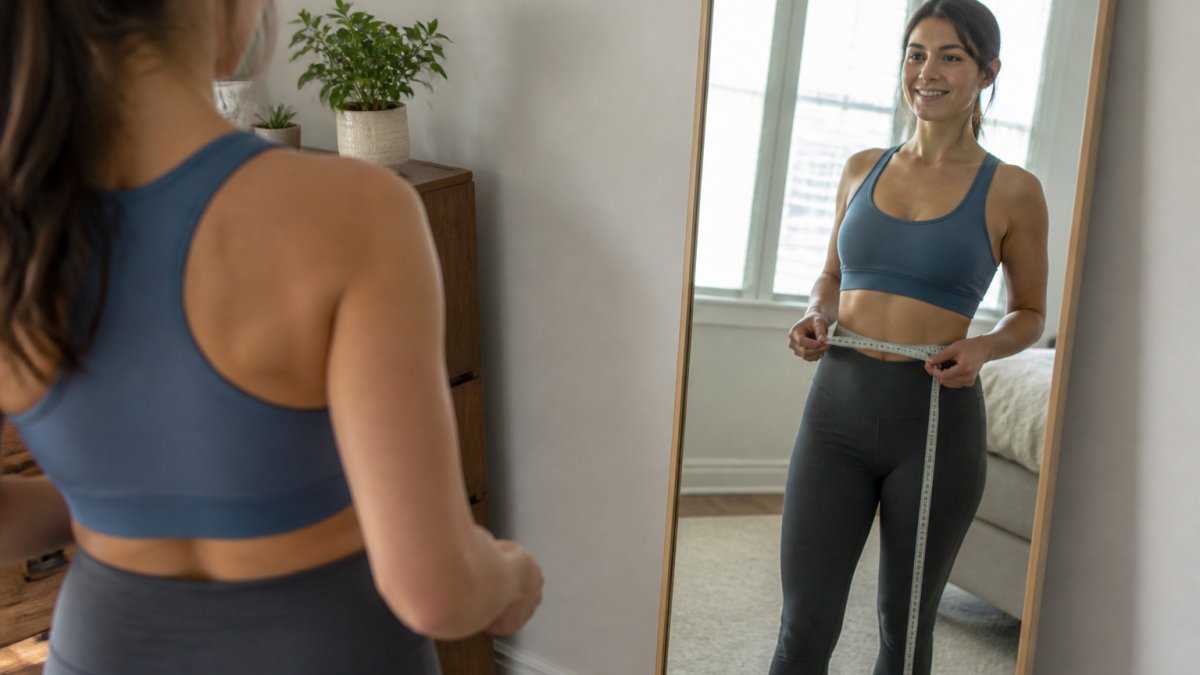
Stand straight with your feet together and your arms relaxed at your sides. Breathe normally and keep the tape level all the way around. A common mistake is pulling the tape tight, which shrinks the number and gets you a size that digs in. The tape should sit snug but not tight.
Work through these in order:
- Shoulders. Measure across the back, from the tip of one shoulder to the other.
- Chest or bust. Wrap the tape around the fullest part, keeping it level.
- Underbust. Measure directly under the bust, around the ribcage.
- Waist. Find your natural waist, the narrowest point above the belly button.
- Hips. Measure around the fullest part of your seat.
- Inseam. Measure from the crotch seam down to where you want the hem.
- Sleeve length. Measure from the shoulder point to the wrist.
Write every number down. Repeat each one twice and use the average if they differ.
How to Measure Waist for Clothing
The waist is the measurement people get wrong most often. Your natural waist is not where your jeans sit. It's the narrowest part of your torso, usually just above the belly button and below the ribs. Bend sideways; the crease that forms is your natural waist.
Wrap the tape around that point, level with the floor. Keep one finger under the tape so it doesn't dig in. Breathe out normally before you read the number. Don't suck in. NHS guidance on measuring waist notes the tape should sit level and not compress the skin, the same principle that keeps your clothing size accurate.
How to Measure Hips for Clothing
Hips are measured at the fullest part, not at the hip bones. Stand with your feet together. Wrap the tape around the widest point of your seat, keeping it parallel to the floor. Check in the mirror that the tape isn't riding up at the back.
- Keep the tape level front to back
- Don't pull it tight across the seat
- Read the number where the tape meets itself
If your hips and waist land in two different sizes on a chart, buy for your larger measurement and have the smaller area taken in. It's far easier to remove fabric than to add it.
How to Use a Clothing Size Chart to Choose Your Size
A size chart only works when you compare like with like. Most charts list body measurements, the numbers you take around yourself, but some list garment measurements, taken flat across the item. Before you match anything, check which one the chart uses. If it says "chest 50cm" for a shirt, that is usually a flat measurement, not a body measurement, and you need to double it to compare with your own chest circumference.
Here is a practical way to work through any chart:
- Identify the chart type. Look for wording like "body measurements" or "garment measurements." If it is unclear, assume flat garment measurements and double the chest, waist, and hip numbers.
- Match your largest relevant measurement first. For a fitted top, that is usually your bust or chest. For trousers, it is your hip or waist, whichever is larger on your body.
- Read the fit note. Brands label cuts as slim, regular, relaxed, or oversized. A relaxed-fit medium and a slim-fit medium are not the same garment, even if the chart numbers match.
- Check the ease. Ease is the difference between your body measurement and the garment's finished measurement. A shirt with 2-4cm of ease at the chest feels close-fitting; 8-12cm feels relaxed. If the chart gives finished measurements, subtract your body measurement to find the ease and decide whether that matches your preference.
- Decide between sizes. If you fall between two sizes, size up for woven fabrics with no stretch and size down only if the fabric has significant elastane and you want a close fit.
| Your situation | What the chart shows | Practical move |
|---|---|---|
| Between two sizes | Border of S and M | Size up for comfort, especially in woven fabrics |
| Waist smaller than hips | Two different sizes | Buy for the larger measurement and have the waist taken in |
| Measurements match | Direct hit | Order your usual size, but check the fit note |
| Chart lists flat garment measurements | Chest 50cm flat | Double it to 100cm, then compare with your body |
| No chart listed | Unknown | Ask the brand for body or garment measurements before ordering |
Which? guide to online clothes shopping points out that sizing varies widely between brands, so the chart on each product page is the one that counts, not the size you wore in a different label.
Body Measurements vs. Garment Measurements: What Matters for Fit
These two numbers are not the same, and mixing them up causes most sizing errors. Body measurements are the numbers you take around your own body. Garment measurements are the flat measurements of the clothing itself, taken across the chest, waist, and hips while the item lies flat.
Here's the difference in practice:
- Body measurement: your chest is 96cm around.
- Garment measurement: the shirt measures 50cm across the chest, doubled to 100cm around.
The gap between the two is called ease. A little ease lets you move; too much looks baggy. If a garment's doubled measurement is barely bigger than your body, expect a tight fit. This is the step most size charts skip, and it's why reading both numbers saves you a return.
Measurement Checklist for Different Garment Types
Different clothes need different numbers. A shirt that fits at the chest can still pull at the shoulders, and trousers that fit the waist can be wrong at the rise. Use this checklist before you buy, and note which measurements are critical versus nice-to-have for each garment.
- Tops and t-shirts: chest or bust, shoulder width, sleeve length, body length from high point of shoulder to hem. Shoulder width matters most in woven shirts; chest matters most in knit tees.
- Dresses: bust, waist, hips, and dress length from shoulder to hemline. For fitted dresses, also note your hollow-to-hem if the brand provides it.
- Trousers and jeans: waist, hips, inseam, rise, and thigh. Rise is the distance from the crotch seam to the top of the waistband, front rise and back rise can differ, and a low rise will sit differently even if the waist number matches.
- Jackets and coats: chest, shoulders, sleeve length, and back length. Back length is measured from the base of the neck to the hem and determines whether a jacket hits at the hip or the thigh.
- Activewear: chest or bust, waist, hips, and inseam for leggings. Look for stretch percentage in the fabric, a legging with 20% elastane will fit differently from one with 5%.
How to take the less obvious ones:
- Rise: measure from the crotch seam of a pair of trousers that fit you well, up to the top of the waistband. Do this on the garment, not your body.
- Thigh: wrap the tape around the fullest part of your upper thigh, just below the crotch.
- Back length: measure from the bony bump at the base of your neck down to where you want the hem to sit.
If you are shopping online and the brand offers a made-to-measure or size-recommendation tool, enter these numbers directly rather than letting the tool guess from height and weight. The more specific your inputs, the more reliable the output.
Troubleshooting Common Measurement Problems
Most measuring problems come down to three things: a tape that isn't level, a tape pulled too tight, or a body that has changed since you last checked. Fix them in that order.
- Tape slips or tilts. Measure in front of a mirror so you can see the back.
- Numbers keep changing. Measure twice, at the same time of day, and average them.
- Measuring alone is hard. Use a mirror for the back, or ask someone to help.
- Mobility or reach limits. A seated measurement works for waist and hips. A tape with a locking clip holds the spot for you.
- Between sizes every time. Buy for your larger measurement and use a tailor for the rest.
Your body isn't the problem. Fit is a numbers game, and once you have your numbers, it stops being a guess.
Frequently Asked Questions
How to measure hips and waist?
Measure your waist at the narrowest point, usually just above your belly button. For hips, measure around the fullest part of your buttocks. Keep the tape level and snug but not tight. Record both numbers and compare them to the size chart for the specific garment you want to buy.
Is size 12 large or XL?
Size 12 is typically a large in many brands, but sizing varies widely. Always check the specific brand's size chart because a size 12 in one store might be a medium or XL in another. Use your body measurements as a guide rather than assuming a fixed number.
How do you take accurate body measurements by yourself?
Stand straight in front of a mirror, wear light clothing, and use a flexible tape measure. Keep the tape parallel to the floor. For hard-to-reach areas like the back, use a mirror or ask for help. Measure twice to confirm accuracy and write down each number immediately.
How do you use body measurements with an online size chart?
Compare your bust, waist, and hip measurements to the size chart provided on the product page. If your measurements fall between two sizes, choose the larger size for a looser fit or the smaller for a snug fit, depending on your preference. Also check the garment's fabric stretch and intended fit.
Sizing guesswork is the main reason online clothing orders get returned. At Heartsnatchersclothing, we built a secure online shopping platform so you can explore our apparel range with confidence, and we're completing a security verification process to keep every visit safe. Measure once, save your numbers, and shop with a clear head. Get started with Heartsnatchersclothing and find the fit that works for you.